

In a recent White House announcement, President Donald Trump sparked controversy with his remarks about plastic straws. “I don’t think that plastic is going to affect the shark very much as they’re … munching their way through the ocean,” he said, suggesting that the environmental impact of these small items might be overstated. This statement, while seemingly dismissive, belies the enormity of the global plastic pollution crisis.
The Growing Tide of Plastic Waste
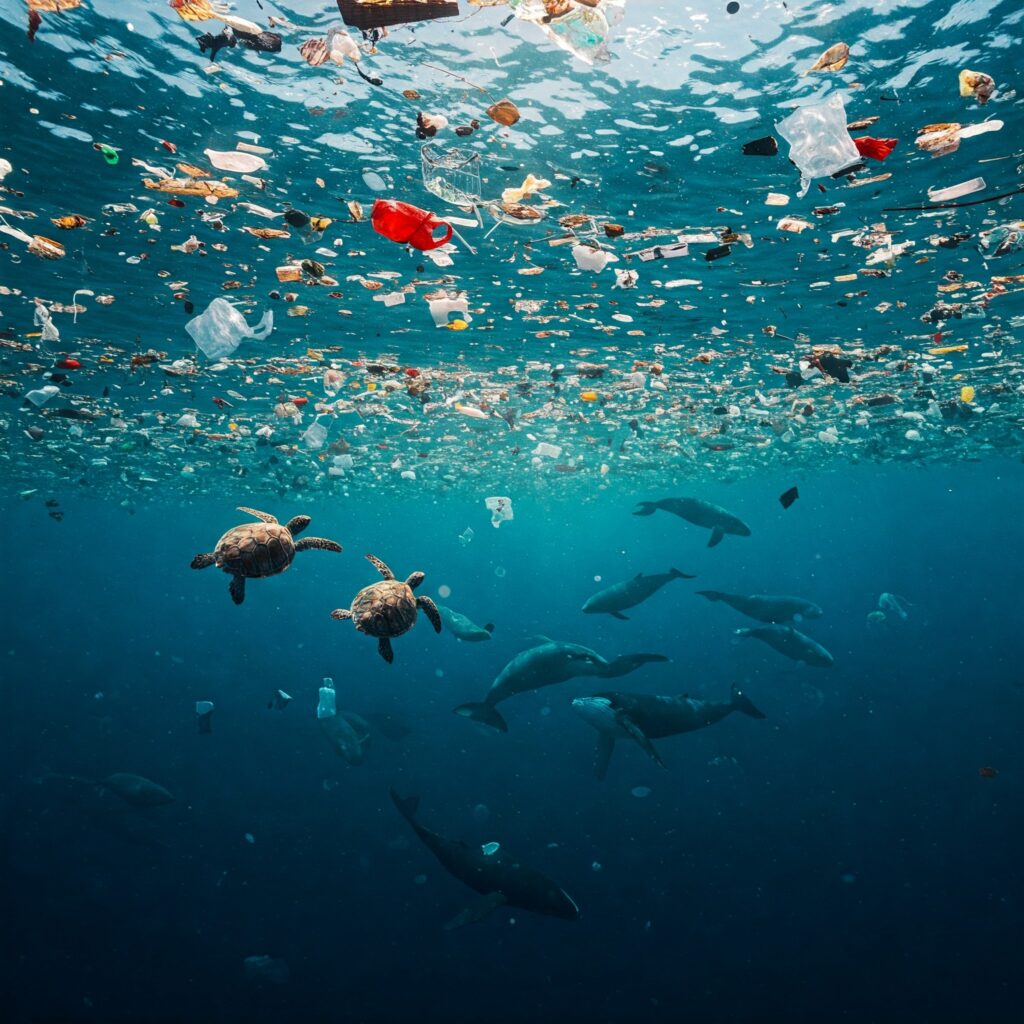
Despite the president’s downplaying of the issue, plastic waste is a monumental challenge. Every minute, the equivalent of one garbage truck’s worth of plastic—ranging from bags and bottles to toothbrushes and food packaging—enters the oceans. More than 90% of these plastic products are derived from fossil fuels such as oil and natural gas, and their widespread use has resulted in millions of tons of waste annually. As plastic degrades, it breaks down into microplastics that are now pervasive in marine environments and even in human blood and tissues.
Studies have documented the tangible impacts on wildlife. For example, plastic straws have been found perforating the stomachs of penguins, while one incident even revealed a plastic straw jammed in the nostril of an Olive Ridley sea turtle. These images have become emblematic of the broader issue of plastic pollution.
Effects on Marine and Terrestrial Life
The environmental impact of plastic waste extends far beyond its physical presence. In marine ecosystems, the accumulation of plastic debris affects a wide range of species. Sea turtles, for example, are particularly vulnerable. The ingestion of plastic or the physical blockage of digestive tracts can be fatal, exacerbating the decline of these already threatened creatures. Moreover, as plastics break down into microplastics, they are consumed by fish, birds, and other marine animals, entering the food chain and eventually impacting human health.
On land, the problem is just as insidious. Microplastics have been detected in various terrestrial environments, and evidence suggests that these tiny particles can make their way into the bloodstream of animals—and humans—posing potential long-term health risks. Whether affecting livestock or wildlife, the pervasive nature of plastic pollution is a stark reminder of the interconnectedness of our ecosystems.
The Longevity of Plastic Pollution
One of the most alarming aspects of plastic waste is its persistence in the environment. Plastic straws, for instance, can take at least 200 years to decompose. In some cases, they linger for up to 300 years, contributing significantly to beach litter and oceanic debris. The Organisation for Economic Cooperation and Development estimates that around 380 million tonnes of plastic waste are produced globally each year. Of this enormous quantity, about 23 million tonnes find their way into the environment—with estimates suggesting that between 1.7 million and up to 12.7 million tonnes of plastic end up in the oceans annually. These staggering figures highlight the urgent need for systemic change in how plastic is used, managed, and disposed of.
Searching for Better Alternatives
In response to growing environmental concerns, many have turned to alternatives to traditional plastic straws. Materials such as paper, biodegradable plastics, and even innovative plant-based compounds are being used to manufacture single-use straws. Although these alternatives are not entirely without environmental impact—they still require energy and resources for production—they tend to decompose much more quickly than conventional plastics, thereby reducing long-term waste accumulation. In many ways, these alternatives are considered a step in the right direction, even if they are not a perfect solution.
Corporate and Policy Initiatives

The challenge of plastic pollution has spurred a range of initiatives across both the corporate and governmental sectors. High-profile companies are leading by example:
- Starbucks set a goal to eliminate plastic straws from its stores by 2020, a move that could have removed up to one billion straws from circulation annually.
- A&W Canada pledged to be the first restaurant chain in North America to eliminate plastic straws, cutting out an estimated 82 million straws per year.
- In the lodging and leisure industry, Marriott announced plans to eliminate plastic straws and stirrers from its 6,500 locations by July 2019, while Hilton Hotels aimed to remove 5 million plastic straws per year by the end of 2018.
- The travel industry is also taking notice, with Royal Caribbean Cruises and American Airlines setting timelines to eliminate plastic straws from their operations.
These corporate moves are complemented by governmental policies around the world designed to reduce single-use plastics and promote recycling. While transitioning to alternative materials and new waste management practices poses challenges—especially given the lightweight nature of items like straws, which are difficult to recycle—the combined efforts of private and public sectors signal a growing commitment to addressing the root causes of plastic pollution.
A Call for Comprehensive Change
The conversation around plastic straws is emblematic of a broader debate about environmental responsibility. While President Trump’s comments may seem to minimize the problem, they serve to highlight the disconnect between public statements and the reality of a planet overwhelmed by plastic waste. The persistence of plastics in our ecosystems, their far-reaching impact on both marine and terrestrial life, and the challenges of decomposition all underscore the need for comprehensive solutions.
From improved recycling infrastructure to innovative alternative materials, and from bold corporate initiatives to stringent governmental policies, the global effort to reduce plastic pollution is multifaceted. Only by addressing every stage of a plastic product’s life cycle—from production to disposal—can we hope to mitigate the damage and move toward a more sustainable future.
References:
[1] Durga Prasad Behera, Prabhu Kolandhasamy, Sivaraj Sigamani, Lakshmi Prabha Devi, Yusof Shuaib Ibrahim, A preliminary investigation of marine litter pollution along Mandvi beach, Kachchh, Gujarat, Marine Pollution Bulletin, 2021, https://doi.org/10.1016/j.marpolbul.2021.112100.
[2] Sea Turtle Conservancy, http://www.seaturtle.org/mtn/archives/mtn147/mtn147-3.shtml
[3] Martha L. Brandão, Karina M. Braga, José L. Luque, Marine debris ingestion by Magellanic penguins, Spheniscus magellanicus (Aves: Sphenisciformes) from the Brazilian coastal zone, Marine Pollution Bulletin, 2011, https://doi.org/10.1016/j.marpolbul.2011.07.016
